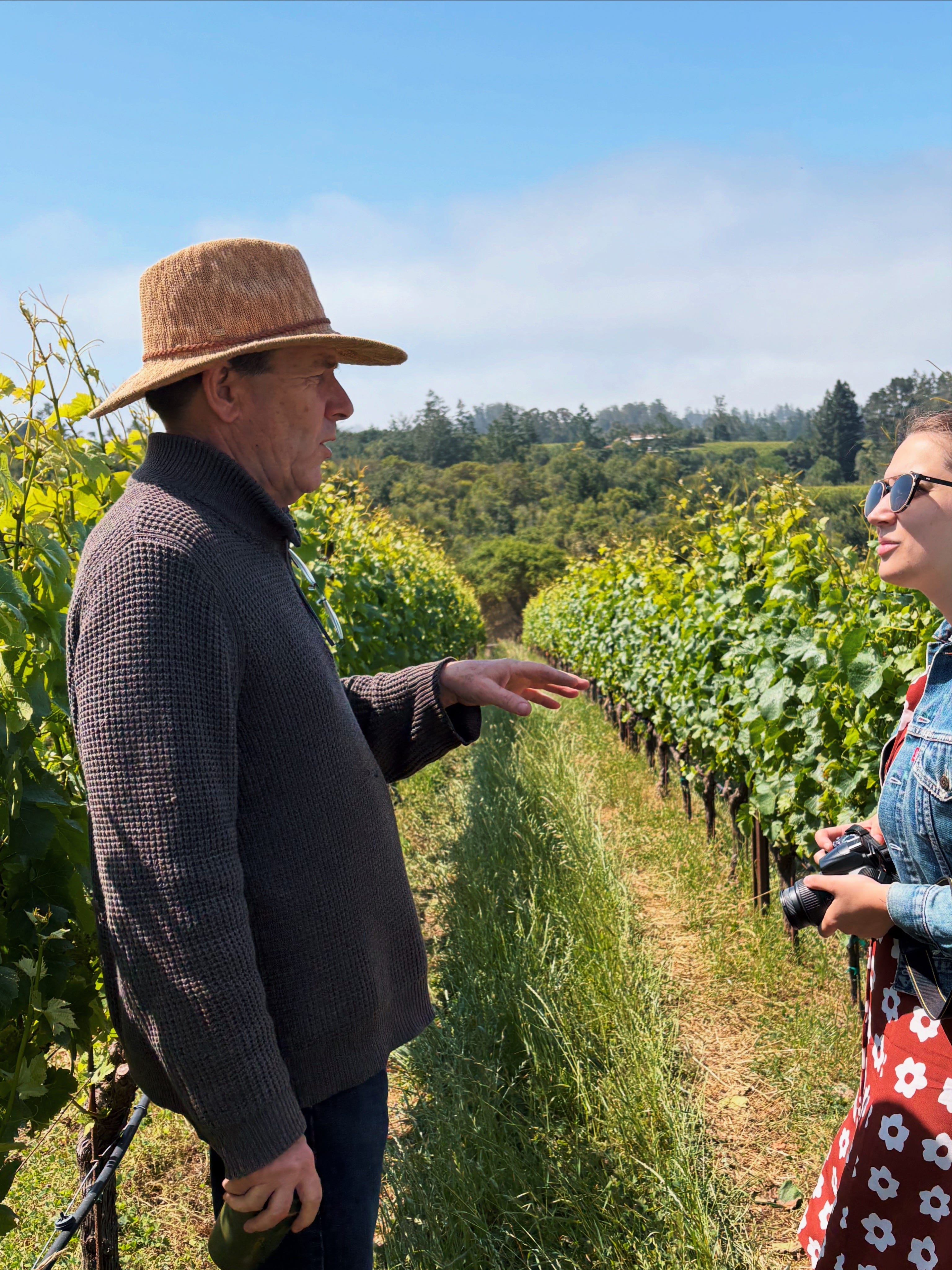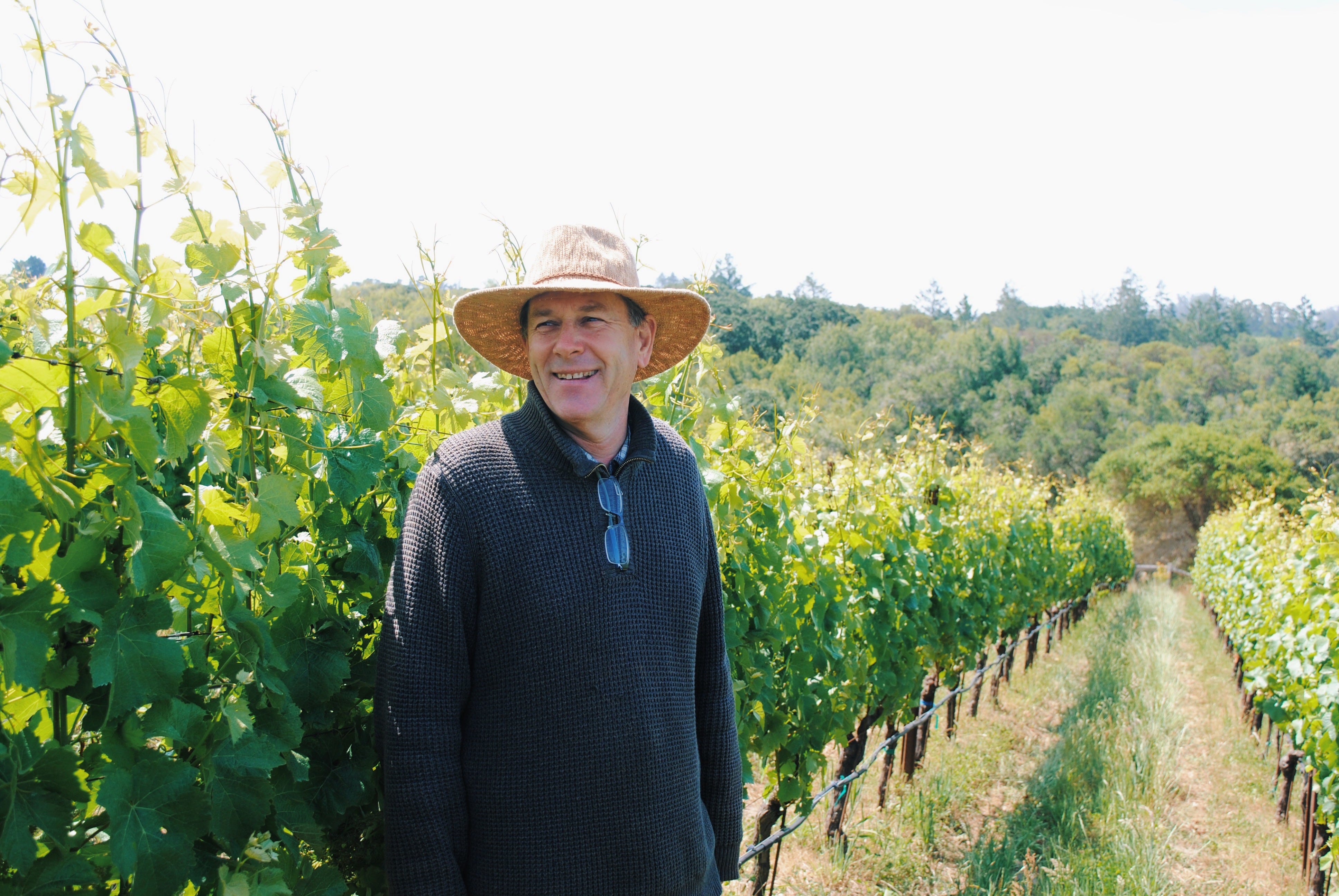
In 2024, I interviewed Ted Lemon for nearly three hours in the lounge of Restaurant St Barts in Shoreditch. In 2025, I visited him in Sebastapol, spending the morning wandering across his vineyards, exploring his biodynamic preparations and tasting extensively across the Littorai range. We ended up staying so long that we were woefully late to our appointment at Williams Selyem. They understood, though. How could anyone ever tear themselves away from Ted Lemon?
In 2026, Ted came to the UK, and we sat down again for coffee. He asked me why I wasn’t working as a journalist yet. For the last five years, I have been writing for others, publishing articles to suit the voice and aims of my employers, but so rarely for myself. My friends and family have often asked the same question as Ted, but I always felt that they may have just been being “nice”. I didn’t think I was actually good enough to share my own voice. It took Ted asking that question for the penny to drop.
Ted is the reason I started my Substack. It feels only right to share that 2024 interview again. The one that ultimately led me here.
Ted Lemon was among the first to discover the potential of Sonoma’s true North Coast, founding Littorai with his wife Heidi, and helping transform an unknown, rugged region into one of the world’s finest growing areas for Chardonnay and Pinot Noir. He is also a leading practitioner of biodynamic farming, which has been a key part of Littorai’s philosophy since its founding.
Here I speak with Ted at length about his career, starting with his early introductions to winemaking in Burgundy through to the founding of Littorai and how taking a simple approach has led to some of the USA’s greatest wines. It is long, but it leaves no stone unturned in a career that has been such a lynch pin in modern Californian wine history.
How did you end up working for Domaine Dujac?
I had lived in France at the age of 15 for a year with a French family, nothing to do with wine, and I had loved it. So, I planned to go back for a year of university, and I just wanted to be in a place that was a wine region.
I was an East Coast American kid who had no family in wine. I took a wine appreciation class at the University of Dijon. It was taught by a wonderfully enthusiastic gentleman who was passionate about Burgundy, Jean Michel Lafond, who for many years was the director of the Office of Tourism in Dijon. He’s the one who said to me, “Look, you seem awfully interested. If you ever wanted to do a stagiaire or an apprenticeship, why don’t you let me know, and I’ll see if I can help you?”.
I thought, why not? Who would ever regret spending a year working in the vineyards of Burgundy?
However, François Mitterrand had just been elected as the first socialist president of France. The Right in France was freaking out, hiding money under the mattresses, and nobody wanted to hire foreigners, so the timing was awful. Jean Michel struck out with all his contacts. Finally, he scribbled the phone number for Dujac on a piece of paper and handed it to me across the desk, saying, “I don’t personally know these people, and so I can’t help you, but call Jacques; his wife is American so maybe he will have suggestions.”
It was a cold call to Domaine Dujac in August of 1980 that led me to work there!
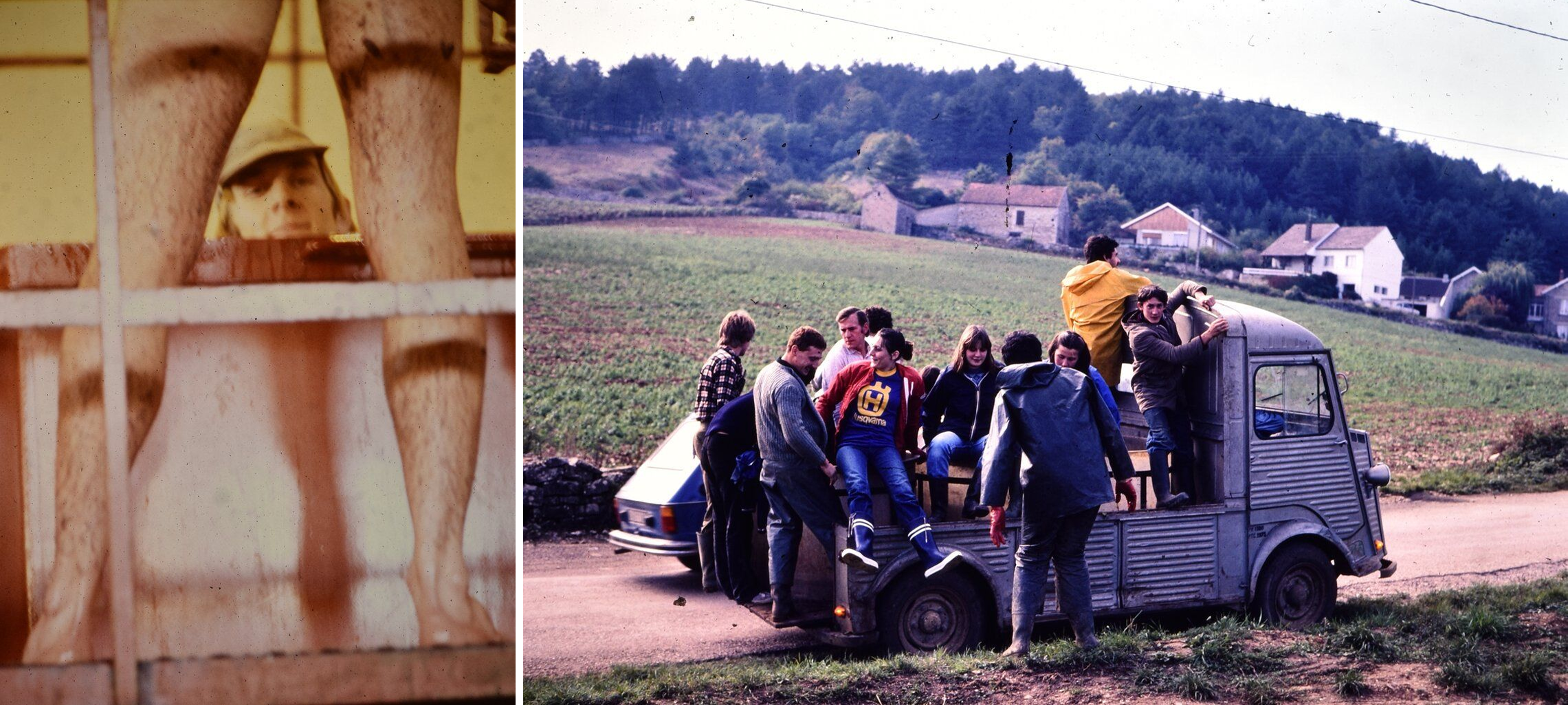
How do you think attitudes have changed in the area since then, in relation to Americans and other foreigners coming to work there?
Burgundy is a profoundly different place now, on many different levels.
When I arrived, it was sort of the end of the patriarchal, traditional time of Burgundy. You had the likes of Christophe Roumier, Dominique Lafon, Patrick Bize and Etienne Grivot, who were just starting and began to change things. They had also come to the feeling that there was great value and privilege in being born into these families, because most of their fathers had made little money in the wine business for many years. It was not a profitable business, and there had been several decades which were really difficult. For instance, the 1970s in terms of quality had been extremely difficult. This was sort of the last moment in time when there was still a very clear connection to that past.
I’ll never forget that Fall, Jacques Seysses being on the phone one evening with Pierre Ramonet, who had called him because his harvesters had just gone on strike, and he didn’t know what to do. Pierre said, “I don’t understand it, Jacques, I’ve taken a cold shower outside in the courtyard every day of my life, and they want hot water in the shower.” It was 1980! So, there was that last glimpse of a very, very different world and a very different attitude. It was still visible.
Now of course, Burgundy is much more open to the outside; there are so many more foreigners who work there, and it’s just utterly different to when I first arrived there.
You were ahead of the curve!
Oh, there wasn’t a curve; it was just a dot [laughs]. The dot was just me for a very brief period of time and then Pascal Marchand from Canada. That was it! With merchants you had Becky Wasserman and Kermit Lynch, and James Halliday would come from Australia to taste, but in terms of winemakers there was next to nothing.
You worked with some other really amazing producers in Burgundy as well [notably Roumier and Roulot], what made you gravitate towards them?
Jacques was very much my mentor. When I arrived, he’d just had a very serious back operation which was going to take him quite a while to recover from. They were desperate. They had two vineyard guys who knew little about the cellar and were trying to figure out how to manage the harvest. When this lanky, string bean of an American showed up and said “yeah, I’ll help, just tell me what to do”, they were very happy to have me!
I spent eight months there, and then Jacques said: “Look, you really should see what else is going on. You don’t need to spend a year everywhere else, but you should spend a month or two and meet these people and talk to them”. It was really all thanks to Jacques that I worked with so many wonderful producers at that time, like Bruno Clair and Aubert de Villaine, and Christophe Roumier’s dad, Jean-Marie. It was an amazing opportunity to spend a few months with these people, getting a sense of their lives and how they work. The key then, particularly, was being fluent in French. Now you can get by without speaking a word of French in Burgundy, but that was not possible in the 80s.
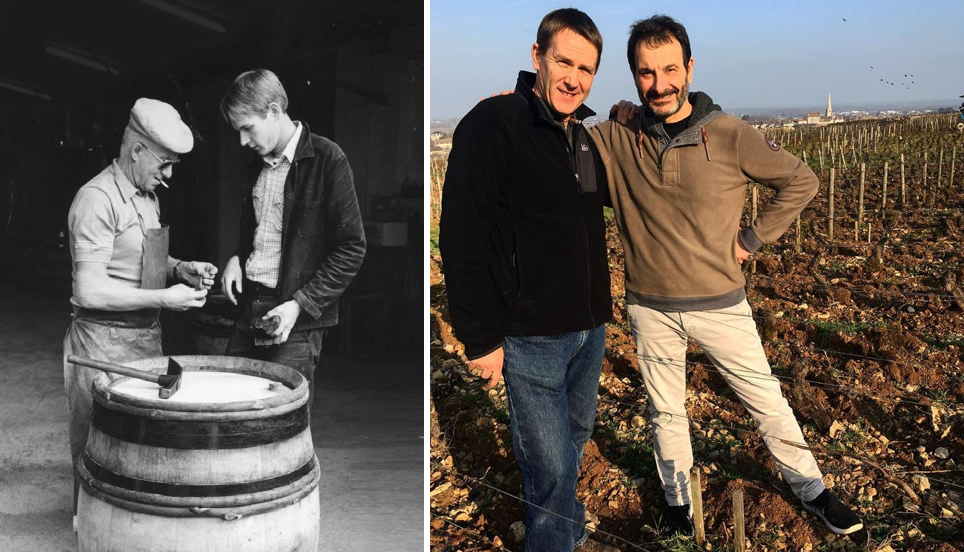
Has your time in Burgundy continued to influence your winemaking today?
Yes, but one thing I am very careful about is this very New World, English term: benchmarking, which I think is a really horrible term. We [Littorai] don’t benchmark against Burgundy. My feeling is that if you spend too much time comparing yourself to another wine region, you are being unfaithful to ‘the person you have married’ who you have chosen to spend the rest of your life with: the wine region you work in. What matters to me is that the ‘Pivot’ wine tastes as much like the ‘Pivot’ vineyard as possible, which is an attitude shared in Burgundy. Where that falls on the spectrum of how people perceive Pinot Noir, that’s up to them to say.
Were any of those Burgundy producers making wine in such a way that you thought ‘that’s the right approach to take, that’s how I am going to work’?
No, I think it was actually the opposite. Not so much what not to do, but to see the contrast in approaches, and yet understand that many approaches make wonderful wine.
I think that was deeply meaningful to me. I mean, working in a place like the Domaine Dujac where they use 100% whole cluster, that was what I was originally exposed to. But then I had the opportunity to visit Henri Jayer and talk to Henri, who would say, “Ripe stems? I’ve never seen ripe stems in Burgundy”. Everything is in the eye of the beholder, and there isn’t a right or wrong way in my eyes.
The other interesting thing is that certain wine styles may do better in certain vintages. People can be passionate about it one way or another, but we’re not dogmatic at all at Littorai.
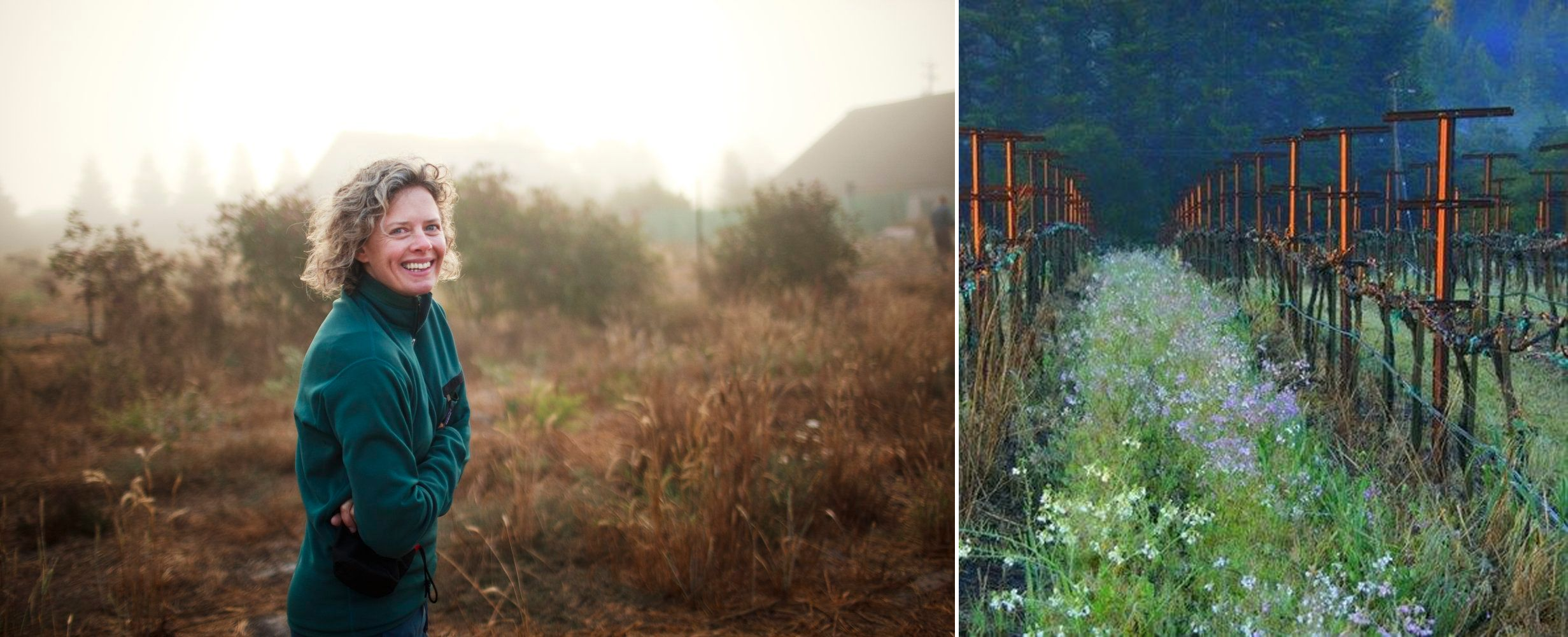
What was it about Sonoma that made you want to start Littorai?
Heidi and I had spent a great deal of 1992 travelling, literally, from the Mexican to the Canadian border, just looking at sites for Pinot Noir and Chardonnay. I loved the wines of Santa Maria and the Santa Rita Hills, I’m a big fan of old Chalone and Calera wines, and I also loved the Willamette Valley. So, we thought very seriously about all of those places, probably most seriously about the Willamette Valley.
In the end, what attracted me to what we call the true North Coast (the coastal hills of Mendocino and Sonoma counties) were two things: the geologic diversity, which is almost unparalleled in the world of wine and the idea of being a pioneer. In the 1990s, you could stand on almost any hillside in western Sonoma County, less than 40 miles from the most famous wine region in the United States [Napa Valley], and you would be standing in a place which was absolutely unknown for wine. In 1990, we knew far more about the potential of the Willamette Valley than we possibly understood about the true North Coast, and that remains true to this day. It’s very difficult to understand this area. Yields are extremely low, and there’s very little plantable land.
When you found the site that you wanted to work with for Littorai, did you plant from scratch or work with existing vines?
It’s important to understand that when we started Littorai, we had no money. There are no investors, and there’s no family money. We started with nothing in the bank, and so it was 100% purchased grapes for seven years. We bought fruit from several sites to try and best understand the area. I don’t want that to sound scattershot though because it was very deliberate. There are still two wines we made in 1993 that we make today from the same sites: ‘Mays Canyon’ Chardonnay and ‘One Acre’ Pinot Noir. So, in 1999 and 2000, when we were ready to buy land, we had a good understanding of what we wanted. That’s when we purchased the site that now produces ‘The Haven’.
All of this was unfolding in the 1990s. There was suddenly this movement whereas before there was nothing. It was Americans discovering American wine regions too; it wasn’t done by the French. It wasn’t like how dramatically Drouhin affected Oregon, for example. This was all done entirely by professional American winemakers, which was really quite extraordinary.
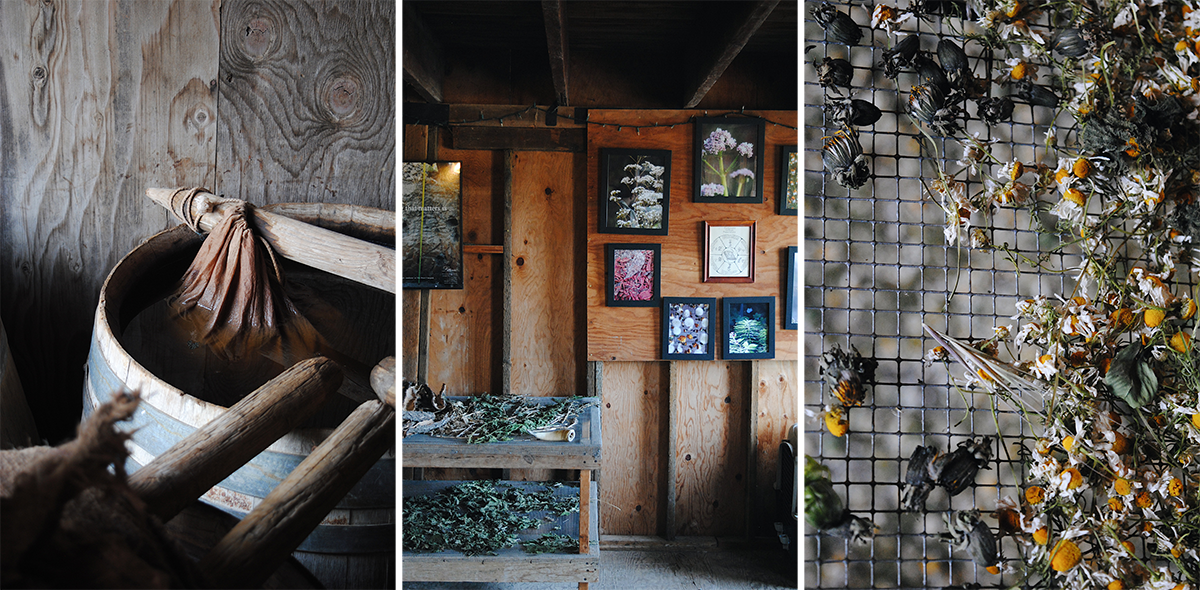
When you started adopting biodynamics, what was it about the approach that made you decide to stick with it?
Think of biodynamics as a language. There are ways to learn a language, right? One is the “Monkey See Monkey Do” where the teacher starts talking to you in the language, and you have to start guessing what they’re saying. Another is a very pedantic sort of way, where the teacher starts writing “bonjour equals hello” and everything is linear. It’s Cartesian logic. You can learn the biodynamic language in all of those ways. But, for it to work for me, because I had a Western intellectual background, I went to an Ivy League college, I needed the Western intellectual understanding of what biodynamics was.
And so, we chose to work with an absolutely extraordinarily talented, temperamental, wonderful man named Andrew Lorand. He had a PhD in Agricultural education from Penn State, which is one of the major land-grant, N-P-K universities in the States. But Andrew was cut from a very different cloth and could give me a logical, rational understanding of biodynamics.
One of the great difficulties of this paradigm is that most of its practitioners struggle to understand the true logical basis upon which the system works. If you don’t understand the basis upon which it works, it’s hard to explain it to other people. You wander in the wilderness too easily, and Andrew, because of his degree in education, completely understood the logical foundational underpinning.
The key to understanding biodynamic farming is that the logical point of departure for the entire system, and all of Steiner’s anthroposophy, is that the spiritual world exists. He’s not saying it’s Hindu, or Buddhist or Christian or Jewish or anything else. He is simply stating that there is a spiritual world behind the world of our physical senses. All of how biodynamics functions flows from that point.
Something you hear sometimes in the world of biodynamics is people saying, “oh biodynamics is amazing, it really works, but the spiritual stuff I’m not so sure about”. Everyone is welcome to their opinion and deserves respect and honour for it, but the basic problem with that mentality is that biodynamics is nothing but a big, hot, steaming cow pat without this point of departure. It means nothing unless you understand how it all flows from that one single proposition. It’s a house of cards without it.
One can intellectually understand the point of departure and be agnostic or atheistic. That’s not a problem because that’s the beauty of logic. None of us has to start from this point, but we can still accept this point, whatever it might be. And from that flows a debate, or an argument. That is the key.
Why do you choose not to certify?
There are two sets of problems with certification. Every farm or winery is going to be different. My feeling is I want to do this because I think it’s the right thing to do, not because I get a Gold Star. I struggle with some of how the US Department of Agriculture has chosen to set out the organic rules. I’m not a huge fan of some of the ways in which the agrobusiness has influenced those rules. That’s one set of problems.
The other one, which is much more deeply philosophical in regard to Demeter certification, is that these were ideas given freely to the world. They weren’t charged for. Nobody had to pay anything to hear Steiner talk about it. No one should own this. These free gifts are incredibly important. In that sense, I don’t want to be part of a system in which someone claims to own the formula.
I don’t own the formula, and in fact, one of the most important lessons I’ve learned about it, in all our years of practising, is that I don’t know if I’ve ever seen a truly biodynamic farm. I’ve seen farms on the path (and I feel like we are on the path), and I’ve seen farms that embody aspects of it extraordinarily well, but it’s such an enormous undertaking. Steiner was nothing if not ambitious, not for himself personally, but for humanity.
I think a mistake people often make is to think of biodynamic farming as a return to the past, and that is a profound misunderstanding. In fact, what Steiner was calling us towards was much more radical and different, and this is why I don’t think I’ve ever truly seen a biodynamic farm. The goal is to generate a completely new, modern relationship between the human being and the physical world in which we live. That can only be done with modern thinking.
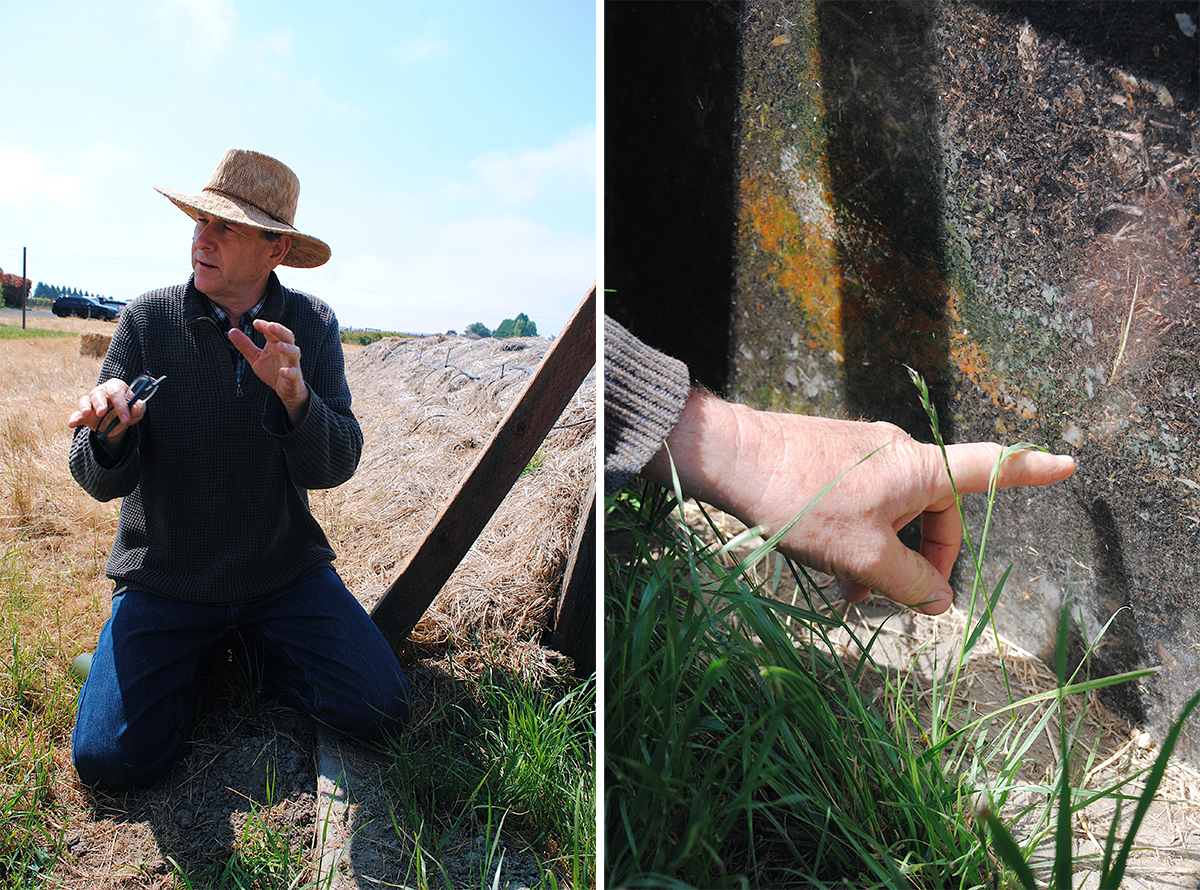
Segueing from farming to the vineyards themselves, could you talk us through each of your vineyards and how you approach making their wines?
I think it’s important to remember that where we operate doesn’t have any of the beautiful logic of, say, Burgundy or the Rhône Valley does. With Burgundy, you have these limestone deposits that built up over millennia, as the sea retreated. It’s a very logical, Cartesian, understandable process.
Where we are, you can’t make those kinds of generalisations. We’re dealing with plate tectonics in the formation of the Sonoma Coast and the Mendocino Coast, and the folding and uplifting and volcanic vents that formed in this violent interaction. It’s helpful to think of each of our vineyard sites as an island unto itself, with different exposures, elevations and soil types, etc. These don’t relate in the same beautiful way as, for example, different vineyards in the same Burgundy appellation. Each has its own unique character.
We try to do as much as possible to keep the élevage similar, if not identical, on all the wines. We want them to taste like themselves. We keep it very simple.
You also work with vineyards owned by other people, for example the Hirsch vineyard. How do you go about choosing those?
Most of it is purely from intuition, meaning that, again, going back to the fact that this was an undiscovered wine region, you didn’t really have the technological basis upon which to make these decisions. You didn’t have precise weather or soil data, so you didn’t know which soils produced great wine on the coast. There was no basis for a technocratic approach. It was a combination of intuition and knowledge of local species. For example, I knew what grows where and that certain plants grew best in free-draining soil while others do better with clay-rich, boggy soils. From there I could take an intuitive approach.
This is also down to the value of having a great European viticulture education. Those who have travelled around Europe enough get to have a good idea of what makes a great vineyard, in terms of exposure and soil, etc. Having spent way too much time dragging around French vineyards, felt like I had developed that sort of sense, and that was the critical part. I’ve applied that intuition to all the sites we work with.
Chardonnay and Pinot Noir are your focus, but would you like to work with other varieties in future?
In my career I’ve made wine from around 35 different grape varieties, so I’ve definitely done a lot of that. The mission of Littorai, though, is more particular.
We aren’t an experimental winery. We have chosen a path, which is relatively traditionalist, dedicated to only a couple of things and if we suddenly went out and started making more wines from, say, seven different varieties, that wouldn’t be logical. Simplicity is very much the key, as with our winemaking. Which really, if you think about it, isn’t culturally very American! Americans are tinkerers. They like to mess with things, and the path we chose is almost the opposite of that.
It is important to me, though, that we don’t bury our heads in the sand about climate change. I think everybody needs to be really serious and thoughtful about that. So, we certainly pay attention to it and certainly think about those things, but what that would mean I have no idea. I can’t tell you. Because you’re dealing with a young wine region that’s barely begun to figure out Chardonnay and Pinot Noir. So, where you would go from here, I don’t know.
For us, the key is to be open and be thoughtful and just see where it goes.
A version of this article was first published for Liberty Wines.