

The Liberty Wines 2026 Independent Off-Trade Wine Report was published this week. It focuses on changes to the market since the 2024 report, though there are several long-term trends identified back to 2019, highlighting those that persisted despite the anomalies caused by COVID-19 and UK-wide lockdowns.
Are you still with me?

I realise that any trade insights report runs the risk of being quite (very) dry, but the findings in this report are genuinely very interesting. And I promise I am not just saying that because I was the person editing it at 9 pm on a Wednesday with a glass of Giant Step’s 2021 Chardonnay (which is excellent).
The Independent Off-Trade is such a key area of the UK wine trade.
Like the Premium On-Trade*, its success often hinges on a hand sell. The people on the floor are on the front line, getting to know their customers, creating personal connections, and understanding the wines they sell and the value they offer to customers. As a result, they are the ideal place for producers who make wines with a higher average price point than in supermarkets to position their wines in the UK off-trade.
However, like the rest of the trade, the headline is that sales are in decline across the independent off-trade. Yet digging deeper, this isn’t the full story.
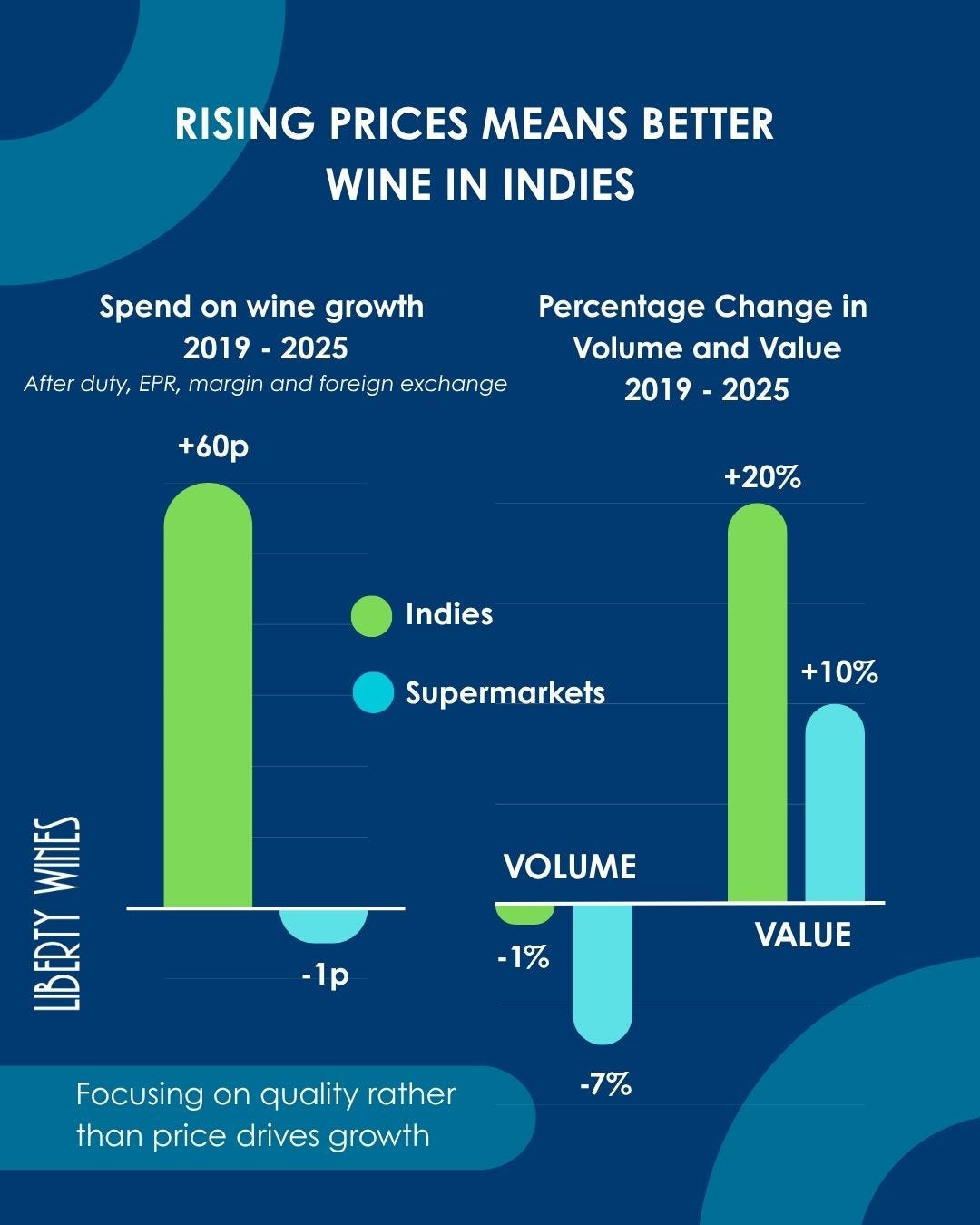
Though the report shows an overall -5% decline in sales vs March 2024, several indies are growing strongly, with one in four increasing sales by over 10% in the same period. Yes, the market is challenging, but remaining committed to selling on quality is key to the resilience of the independent off-trade. Volume and value performance in the quality-led off-trade is actually stronger than in more price-led supermarkets.
The key to this is the quality of the wine in the bottle.
Wine prices have risen across supermarkets and independents by a similar percentage. However, the average bottle price in indies is higher, so duty, transport, and other costs make up a smaller share of the price. There is significantly more money left for wine after accounting for changes in taxes, margin, and foreign exchange. Though the wines in independent retailers cost more on average than in supermarkets, customers are getting better wine in the bottle. This is impacting supermarkets, where sales are eroding, while an emphasis on quality is allowing opportunities for growth in indies.
There is also untapped potential in different spending brackets.
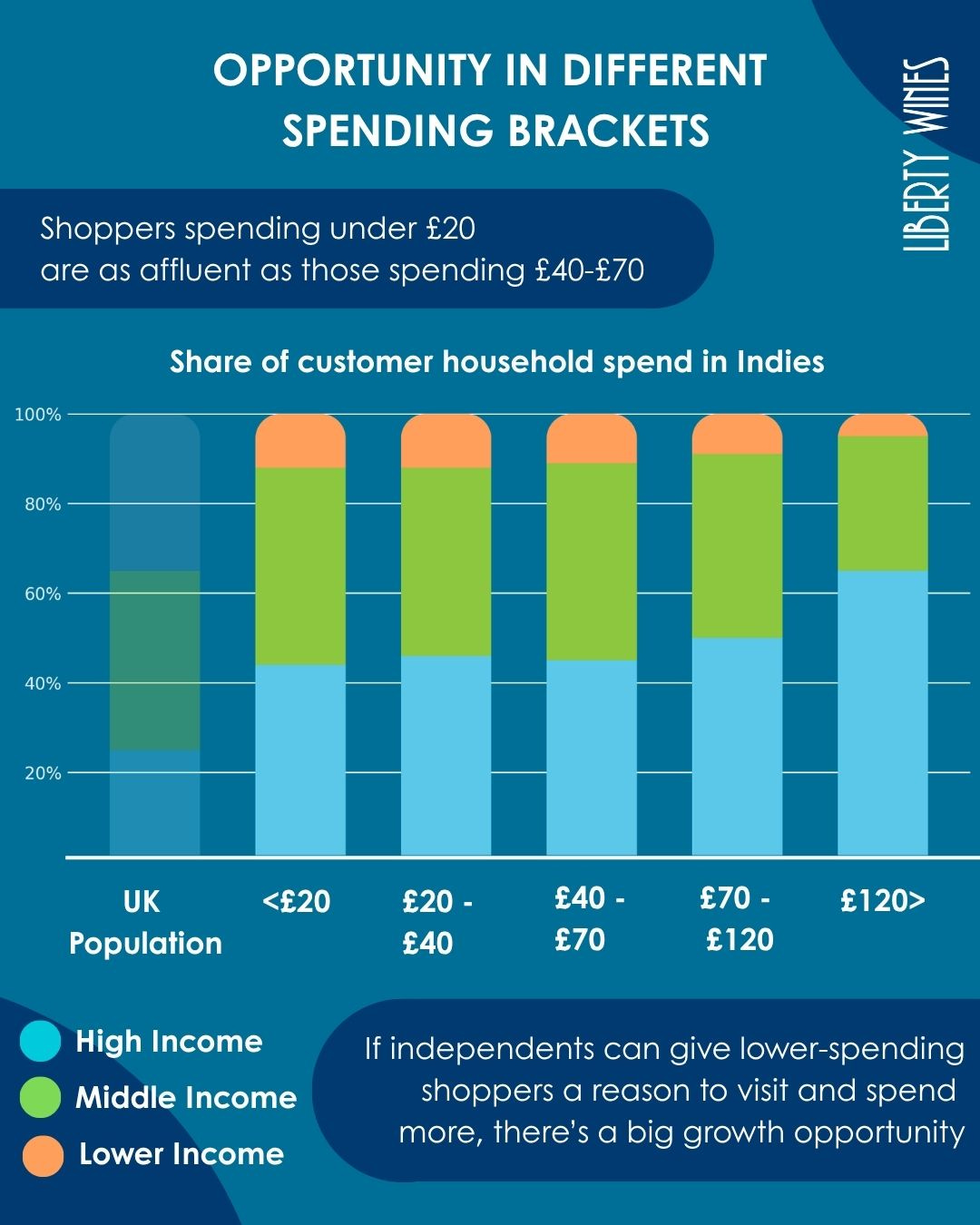
The report shows that the lowest spenders in independents in Year to March 2026 are as affluent as those spending several times more. Customers spending under £20 have the same level of income as those spending between £40 and £70 a month. Tapping into those customers and giving them more reasons to visit and spend more opens up a big growth opportunity.
Doing that is easier said than done, of course. It often relies on the availability of resources: wine training, the team’s skill set to host tastings or similar events, marketing know-how to promote the business, and a full team with the depth of knowledge and sales acumen to convert lower spenders into higher ones.
It’s not easy. But focus on the fundamentals and the rest will follow: excellent service, a solid and manageable wine selection that excites the team, and playing to each other’s strengths within the business. Everyone is good at something; you just have to identify what that is in each staff member and apply it to the customer experience.
Building relationships with your customers, slowly but surely, gives them as much reason to return as anything else. People want to enjoy spending their money, and wine is such an emotive, personal thing. It’s what we drink with friends and loved ones, in the good times and the bad, and the shopping experience is an extension of that. Ultimately, people want to buy from people they like and feel respected by, people they’ve built a relationship with. That’s the best place to start.
The growth won’t be rapid, but it will be steady, creating a solid foundation of regulars who contribute more, over time, than the odd big spender who wanders in once in a blue moon.
The final point I want to focus on in the report is the fact that the average customer is getting younger and embracing variety.
Granted, the “younger” age is 54 vs 56, so please don’t think this means that indies are cracking Millennials and Gen Z en masse. But it’s a start.
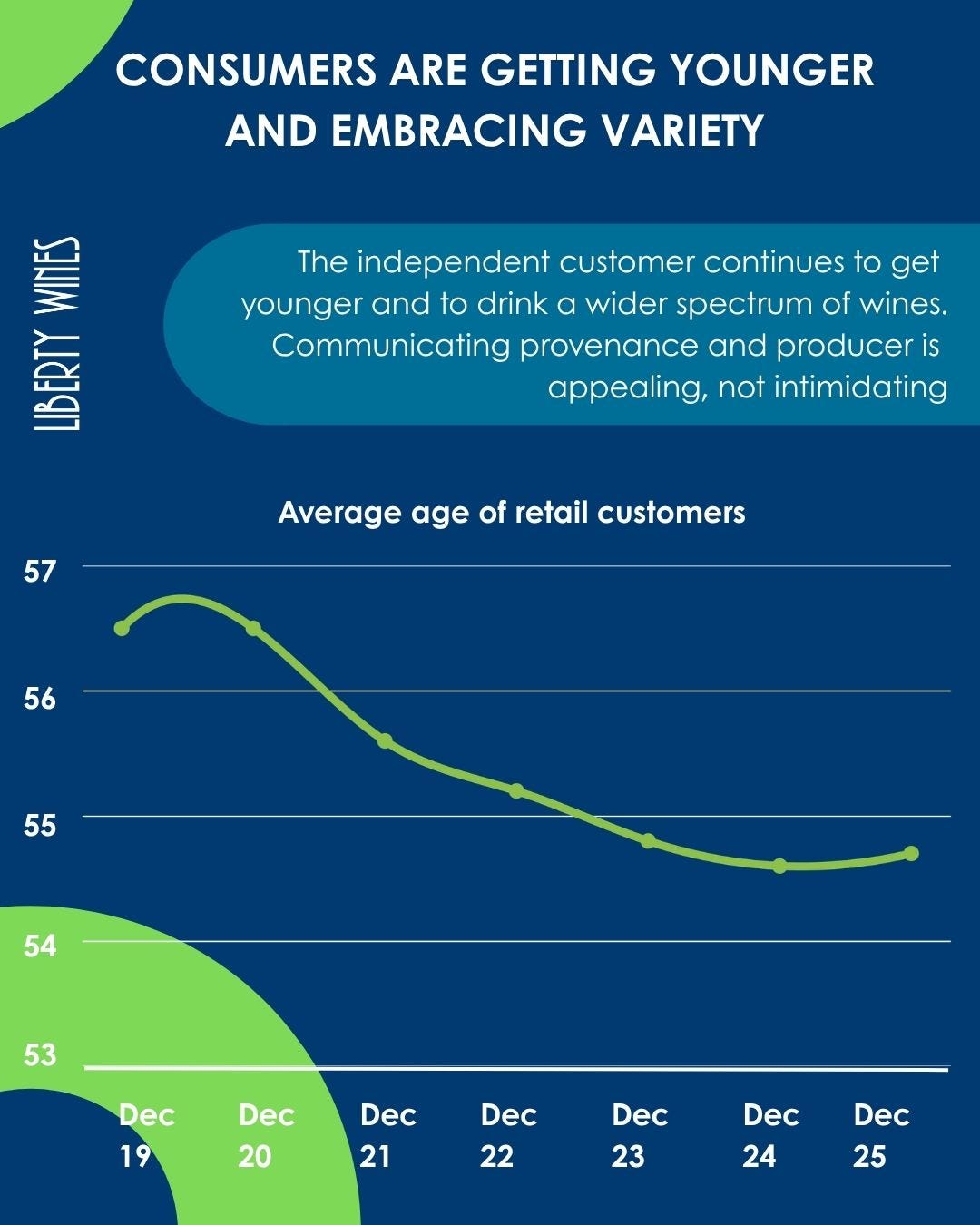
These customers are also drinking a wider spectrum of wines, showing how communicating provenance and producer is appealing, not intimidating.
Though some key styles like Provence rosé, English sparkling wine and Champagne continue to gain market share, quality-orientated consumers are drinking a broader range of wines (which is also true in the premium on-trade). The new wave producers of Spain and South Africa are gaining share, but so are “smaller” countries like Greece, Germany and Georgia.
This was also the case in the 2024 report and the 2024/2025/2026 Premium On-Trade Reports. An interest in trying new things and exploring lesser-known regions, countries, and grape varieties ties into the importance of engaging customers and giving them more reasons to visit and spend.
All the key findings in the report lead back to one overriding message: focusing on quality is the key to sustainable growth. Quality of wines, quality of experience, and quality of service. Get these right, and indies can set themselves up for the best chance at success.
If you would like to read the report in full, you can request a copy here.
*The premium on-trade is approximately the highest-quality quarter of on-trade outlets in Great Britain, slightly over 26,000 in 2024.
How the report was created:
Liberty Wines worked with Reward (previously Hospitality Data Insights, or HDI) on their independent off-trade report. Reward accessed anonymous card transaction data from a major high street bank, encompassing £1 in around £10 spent in the UK. They used this data to track card spending in a sample of over 120 of the UK's leading independent wine retailers. This sample was selected using Liberty Wines’ customer data and third-party awards and publications that recognise leading indies, for example, Harper's Top 50 Merchants and the International Wine Challenge regional merchant awards.
A really great insight, thank you. I work in marketing for an indie in London and we are noting much the same. I am keen to keep personally recommending a wider array of wines, my only hope is that the more old school buyers follow suit and start exploring beyond the traditional margin winners like Burgundy.
Thanks for sharing. 😊